

Getting the air conditioning size right for a Brisbane home depends on room dimensions, ceiling height, insulation and how the house is built, not a generic per-square-metre rule of thumb. An undersized system runs constantly without reaching a comfortable temperature, while an oversized one cycles on and off too quickly and wastes power. This article explains how correct sizing works, what affects the calculation, and why a proper assessment beats an online estimate every time.

How Do You Choose the Right Air Conditioning Size for a Brisbane Home?
Correct sizing starts with the room’s floor area and ceiling height, then adjusts for window size and orientation, insulation levels and how the home is constructed. A north-facing living room with large windows needs more cooling capacity than a shaded, well-insulated bedroom of the same size.
Brisbane’s older timber homes, particularly Queenslanders, often lose and gain heat differently to newer brick veneer builds, which is why a system sized for one type of home can underperform badly in the other.
It’s also worth noting that no two Brisbane homes are identical, even within the same suburb. Two houses built to a similar floor plan can still need different capacity units based on aspect, shading from nearby trees, and how well the roof cavity is ventilated.

What Happens If a System Is Undersized or Oversized?
- Undersized systems run continuously and never quite reach the set temperature
- Oversized systems cool too quickly and switch off before properly dehumidifying the room
- Both scenarios waste power and place unnecessary strain on the compressor
- Incorrect sizing shortens the working life of the system over time
For split systems, the sizing calculation applies to that single room specifically, while a ducted system’s central unit needs to be sized around the combined load of every room it will serve, which is a more involved calculation.
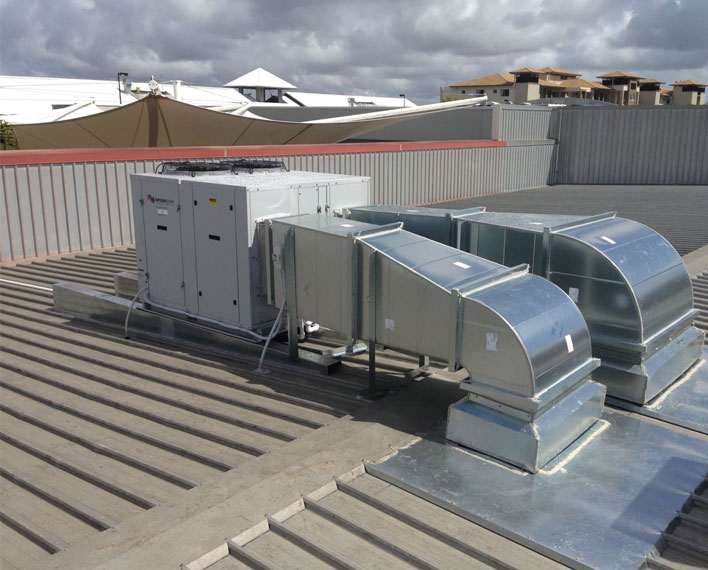
Should You Size for a Single Room or the Whole Home?
This depends on how many rooms need cooling and how often. A single split system suits one or two rooms used regularly, while a ducted system with zoning suits a larger household cooling several rooms at once. Sizing each option correctly still requires the same room-by-room assessment, since a ducted system’s central unit is sized around the combined load of every zone it serves.
Homeowners planning a future renovation or extension should mention this during the initial assessment, since it can affect whether the system is sized with some allowance for additional rooms down the track.
For homes with an existing system being replaced, comparing the old unit’s rated capacity against a fresh assessment sometimes reveals it was undersized or oversized from the original installation.

Why Does Star Rating Matter for Sizing Decisions?
A higher star rating means better efficiency for the same cooling capacity, which affects running costs across a Brisbane summer that often stretches from October through to March. Two units with the same capacity but different star ratings can have noticeably different power bills over their lifespan, so sizing and efficiency should be assessed together rather than separately.

Can You Get an Accurate Size Estimate Without a Site Visit?
Online calculators offer a rough starting point but can’t account for a specific home’s window placement, insulation condition or ceiling cavity design. A proper in-person assessment remains the only reliable way to confirm sizing, which is why most quotes for air conditioning are provided after a site visit rather than over the phone.
A written quote following the site visit should clearly state the recommended capacity and the reasoning behind it, giving homeowners confidence the figure reflects their specific home rather than a generic estimate pulled from a size chart.
The right air conditioning size comes down to a proper assessment of the room, the building and how the home is actually used, not a generic capacity guess. Getting this right from the outset avoids years of higher running costs and a system that never quite keeps up.